
Setting Boundaries vs. Negotiating Expectations
And Why So Many of Us Get This Wrong

Before we jump into this article, a heads-up: we’re hosting a thought-provoking talk with a leading expert on power dynamics, author and executive director of the Right Use of Power Institute - Dr. Amanda Aguilera.
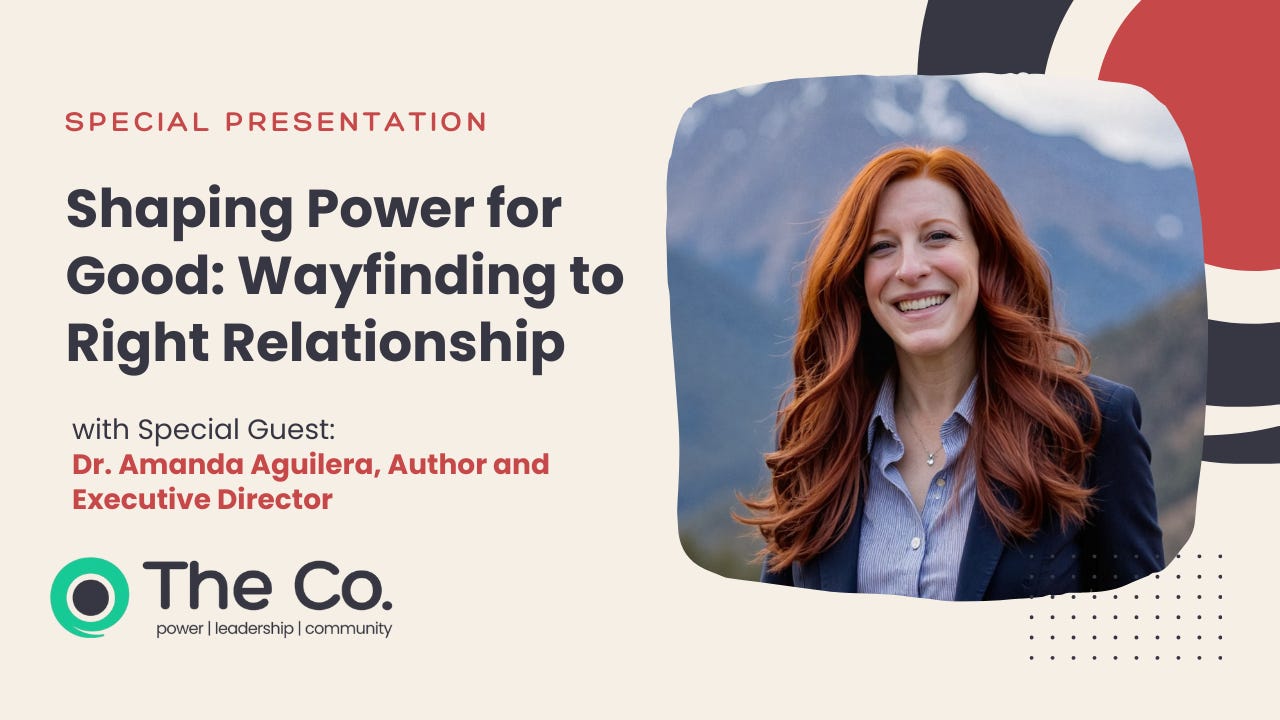
In Shaping Power for Good: Wayfinding to Right Relationship, Dr. Aguilera presents a groundbreaking exploration of power in its many forms, offering a transformative framework for understanding and navigating the complexities of human relationships.
Join us on March 20th (12-1pm) via Zoom for a rich exploration of power and ‘ask me anything’ session with Dr. Aguilera.
All the details and link to register here on Eventbrite.
Now on with the important difference between boundaries and expectations!
You’ve probably seen the advice a hundred times:
“No is a complete sentence.”
“Set boundaries and protect your time.”
“Say no more often.”
Instagram and TikTok are full of this kind of surface-level guidance, and it does have value.
Clear boundaries matter.
Saying no matters.
Protecting your time, energy, and well-being matters.
But here’s the thing: following these slogans alone doesn’t always solve the problem. In fact, it can sometimes make it worse.
Why? Because many of the challenges we experience in relationships and work aren’t about personal boundaries at all. They’re about unclear, unspoken, or misaligned expectations - about the agreements and assumptions that shape how we interact with others.
When we treat every tension as a boundary failure, we unintentionally place the burden on ourselves. We internalize responsibility for what is actually a relational or systemic problem.
We over-explain, over-apologize, and over-compensate… without addressing the real gap.
This piece explores the difference between setting and holding boundaries and negotiating expectations, and why knowing which conversation to have can make all the difference - for your wellbeing, your relationships, and your systems.

When Boundaries Get Overused
Boundaries are essential when we need to protect our limits. But when they become the default response to every relational tension, they can also unintentionally isolate us.
If every challenge is framed as my boundary to manage, we begin to:
Carry responsibility that isn’t actually ours
Normalize unclear, unsustainable, or inequitable systems
Miss opportunities for shared understanding and relational repair
Internalize stress that could otherwise be distributed and addressed collectively
In these moments, the work isn’t just about holding firmer lines.
It’s about clarifying and renegotiating expectations together.
The Core Distinction
At a simple level:
Boundaries clarify your limits.
Expectations clarify our agreements.
Boundaries answer the question:
What am I willing and able to offer?
Expectations answer the question:
What are we agreeing to together?
Both are essential. And both serve very different purposes.
When Boundary-Setting Is the Right Tool
Boundary-setting is most helpful when:
You need to protect your time, energy, or emotional well-being
The expectations placed on you are unreasonable or unsustainable
You’ve already tried to clarify and align, without meaningful change
The issue is about your capacity, availability, or personal limits
In these moments, a clear, grounded boundary helps prevent self-betrayal and burnout. It allows you to act in integrity with your values and needs, even if others are disappointed or uncomfortable.
When Negotiating Expectations Is the Better Path
Negotiating expectations is most helpful when:
Roles, responsibilities, or priorities are unclear
Assumptions have gone unspoken or untested
You and others have different interpretations of what’s reasonable, fair, or expected
The tension stems from misalignment rather than personal limits
In these cases, the issue isn’t about holding a firmer line. It’s about co-creating clarity.
This often involves conversations about:
What “responsiveness” actually means
Who owns which responsibilities
What availability looks like
What timelines are realistic
How decisions get made
What support is reasonable to expect
These are not personal failures. They are relational agreements waiting to be made explicit.
The Cost of Individualizing System Problems
When expectation gaps get misdiagnosed as boundary problems, we often end up doing emotional labour that should be shared.
And we:
Carry guilt for not meeting unspoken standards
Feel responsible for managing relational tension alone
Internalize stress instead of addressing structural misalignment
Work harder to compensate for unclear systems
Over time, this leads to exhaustion, resentment, and disconnection, not because people lack boundaries, but because clarity and fairness never had a chance to emerge.
A More Generous Question
Instead of immediately asking:
How do I set better boundaries here?
You might first ask:
Is this actually about my limits - or about unclear expectations?
That single pause can shift:
Blame into curiosity
Isolation into collaboration
Tension into shared problem-solving
Reflection: Boundary or Expectation?
If you’re wrestling with a recurring tension, try reflecting on these questions:
What exactly feels difficult or heavy here?
Is the discomfort primarily about my energy, capacity, or well-being?
Or is it about unclear roles, responsibilities, assumptions, or agreements?
What might shift if this were treated as a shared problem to solve, rather than a personal burden to manage?
Sometimes the answer will be a boundary.
Sometimes it will be an expectation.
Often, it will be both.
The Bigger Picture
Healthy boundaries protect individuals.
Healthy expectations protect relationships and systems.
When we learn to distinguish between the two, we stop asking people to carry more than their share and start creating relationships and environments that are clearer, fairer, and more sustainable for everyone.
And that might be one of the most compassionate shifts we can make.
✊
Jeff
Resources for the journey
Check out The Co., a membership community for impact-conscious leaders committed to driving genuine change in their organizations and the world (and using their power with intention and skill).
Have a listen to Healthy Boundaries, Self-Care and Power, an episode of The Leaderful Podcast with special guest Woodrie Burich.
